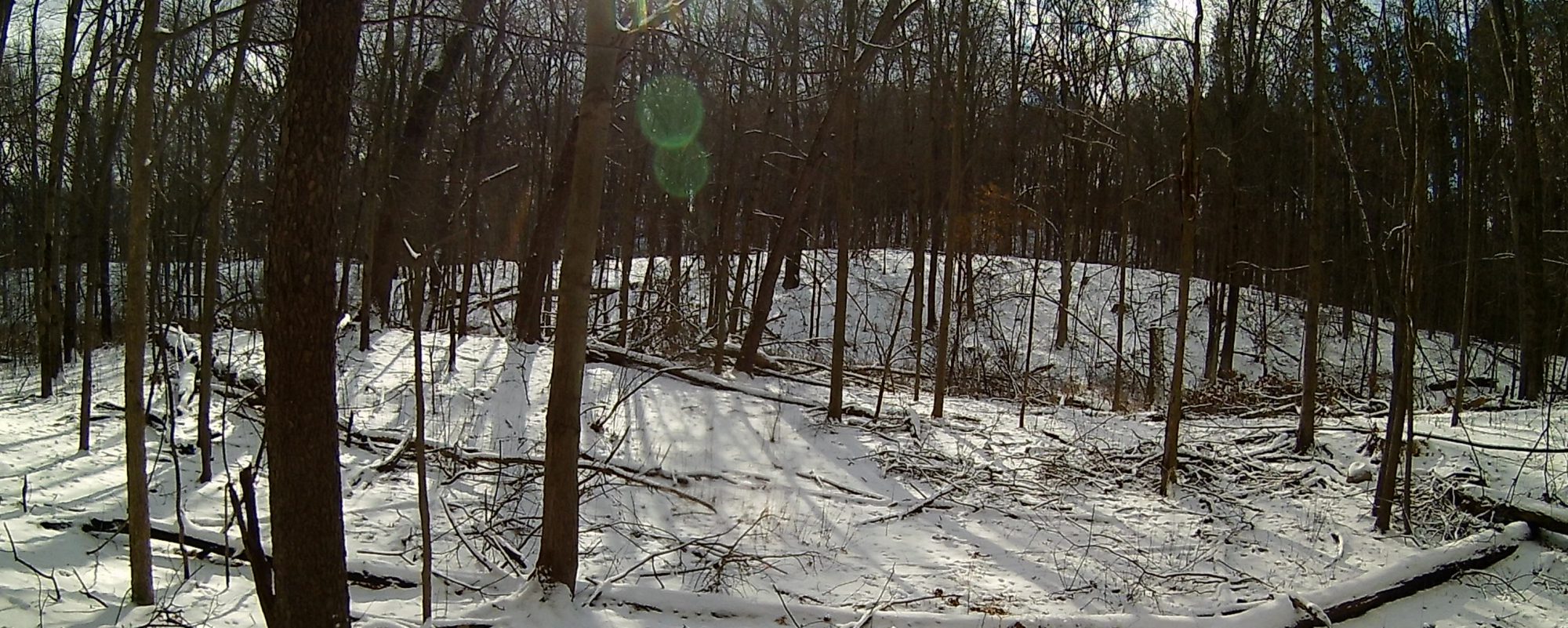
 I started researching the Huron River a few weeks ago after watching a segment on Michigan Outdoors about fly fishing the Huron. I asked a few friends about the river. I went to see the guys at Colton Bay Outfitters in Ann Arbor. I looked at my topo maps. I found some great websites for the Huron Clinton Metroparks. But, the best way to learn about a river is to float it yourself. I did just that and learned what I needed to learn. But I also had time to let go of reality and imagine life along the river 300 years ago when the Wyandot (Huron) people lived here. They were farmers. We are still farmers. They grew tobacco for trade. We grow crops for market. The Jesuit explorers described the Wyandot as “healthier than us”. The metroparks along the river are heavily travelled by joggers and bikers. The Wyandot lived in long houses where 30-40 people lived. The river’s edge today has dozens of long and tall houses that could easily house 40-50 people. The Wyandot were devastated by disease brought here by European settlers. Invasive plants, insects and diseases are still coming. In 300 years we really havent changed a whole lot. Except now there are more of us. Thankfully, the Huron River corridor was saved from too much development. Thankfully, there are people out there who realize the value of nature and it’s preservation. I wish this kind of love would spread to Lenawee County. If I had a gazillion dollars I would buy up property along the River Raisin and create similar parks. But they wouldn’t have a parking lots. Leave your cars at home. Ride or walk. Get out of your steel guzzler and smell the fresh air. Walk in the woods. Get rained on. Take a mud bath. Climb a tree. Catch turtles. Why? Because the Wyandot were healthier than us 300 years ago. That should be a good enough reason. Enjoy your long weekend. Have fun outdoors!
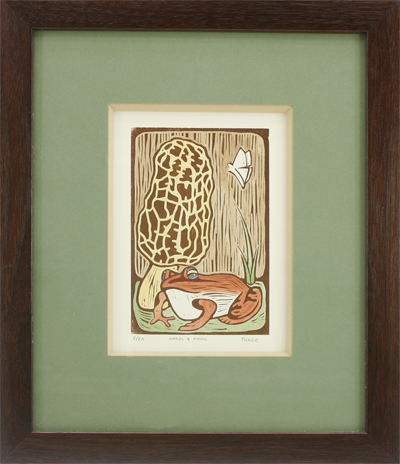
“Morel and Frog” @ The Side Door Gallery
Morel and Frog, woodcut, is available at the Side Door Gallery in Dexter, MI.
Plein Air Paint Out, Saturday, August 28th
 Tomorrow morning I’m headed to downtown Adrian to participate in the Area Artists Plein Air Paint Out from 9am to noon. Any area artist interested in participating should go to the Historical Museum to register at 8:30am. All ages and skill levels are invited to participate. I will be seeking out secluded gardens. You wont find me working on concrete. I will have my toes firmly planted in the grass seeking out wild things. I prefer those dark shadowy places filled with pokey plants and big black ants. Crawl beneath a conifer tree…that’s where you’ll might find me. Let the wild rumpus begin!
Calling all Mathers
It shouldnt surprise anyone that my favorite PBS documentary is “America’s Best Idea” about our National Parks. I purchased the DVD set last year at the Sleeping Bear Dunes National Lakeshore Visitor Center. I like to make comparisons from when the National Park Service was first created in 1916 to now. One theme remains the same. Wild lands should be preserved and protected. From the very beginning the protection was from the timber industry, the mineral industry, and the hydroelectric power industry. Today our land is still under assault by the mineral industry. Under the banner of “drill baby drill” and a fight to ween ourselves from foreign oil we have cut off the tops of beautiful mountains, injected toxic chemicals into the earth to extract gas and endangered our most valuable resources….mainly soil and water. This has not changed from the 1800’s. The mineral industry is relentless. One thing has changed drastically. That is the dedication to service in our government officials. I think most people sense a failure in our system. It’s even more evident when you compare the actions of Stephen Mather, the first National Parks Service director, to the actions of government officials today. Mather, a successful business man, used his own money to ensure the ideals of his newly created NPS. Today it seems the ideals are lost in a whirlwind of dirty deals and self-gratification. We need more Mathers. I know a few. My friend Robert fights for the wilderness in Oregon. My friend Darrin fights for the birds and bird habitat. My friend Karen teaches our young children how to love and understand nature. Local biologist Jim Martin fights for our local streams. Local farmer Lynn Henning fights the CAFO’s in Lenawee. Local businesswomen Aimee Weeber and Erika Aylward support and increase the demand for local food. I wanted to acknowledge all the Mathers out there because people need to be hopeful for our future. Personally, I am doing my best, working within the Government to do what’s right. In true Mather form I am dedicating my lunch breaks to walking our 240 acre property and creating an inventory of our trees. My plan is to assess the condition of the trees on our property and to promote green ideas. This week with the help of friends I am researching conifer tree propagation. By the Spring I hope to plant 25-50 new conifer trees on our property at no cost to the tax payers. I am working hard to install 6 acres of prairie grass to reduce the amount of mowing and CO2 emissions. I am working for a new hoop house for inmates to grow organic vegetables to donate to the needy. I am researching green roofs. I am working for the purchase of new solar panels to reduce our electric usage. There are many obstacles but I am determined to promote the ideals of Stephen Mather. You can be a Mather too. All you have to do is get outside, love nature and then do something/anything to fight for it. The mineral industry is not your puppet master. You can do it.
Toadally happy
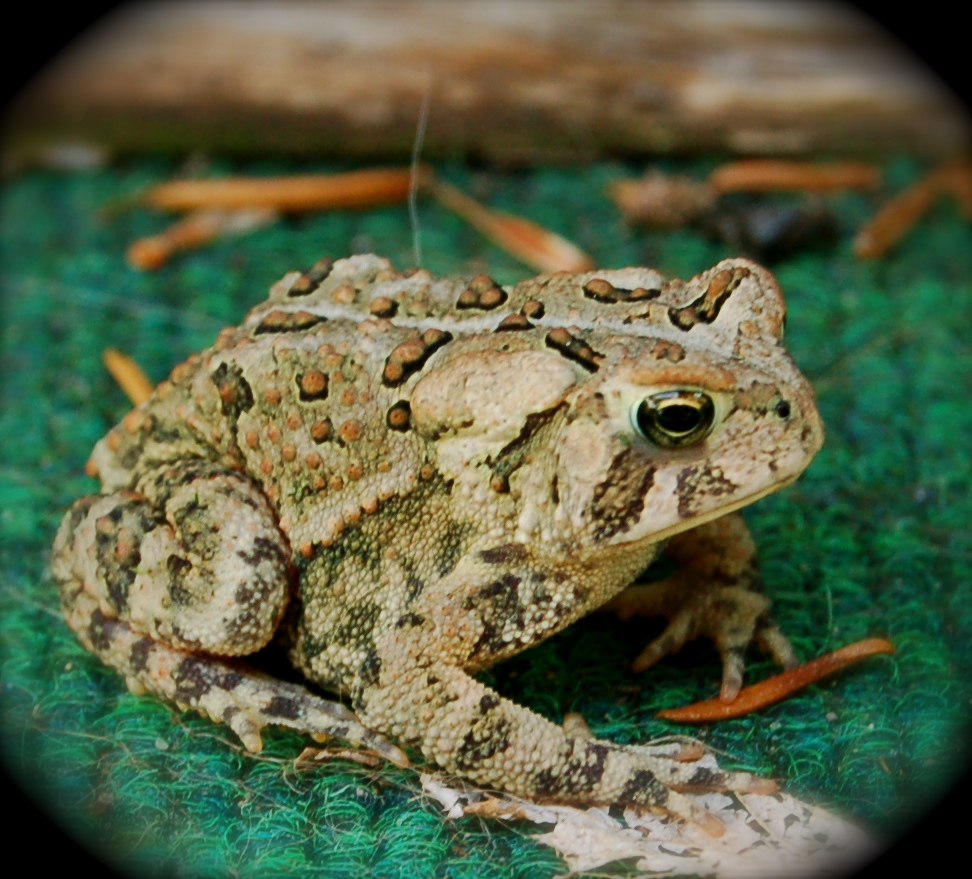 I mentioned to a few friends a few years ago that the frogs and toads disappeared from my yard after I applied pesticide around my house to reduce the ant population. When I stopped using pesticide the frogs and toads came back….thankfully. I should have known better. I should have listened to Douglas Tallamy, the author of Bringing Nature Home. A yard is not a sterile showplace. It is alive with all sorts of plants, animals and insects. We need to learn to coexist with them. I say “we” for a reason. I recently read the River Raisin Watershed Management Plan and the latest Adopt a Stream Report by the River Raisin Watershed Council. The RRWM Plan confirmed that the leading source of pollution nationally is “non-point”. What is non-point pollution? It’s you and me. We are diffuse sources. Our actions are hard to track and difficult to manage. The best way I have found to address the problem is to follow Tallamy. We can no longer point the finger at BP or industry. WE are the leading cause of pollution. We must do what we can to reverse the negative impacts on our land and streams. I don’t claim to be an authority on this. I’m just doing what Tallamy recommends. He says that insects are good. Birds and other animals depend on them. He says get to know your trees because they are not created equal. Native trees are good. Foreign trees are bad. Biodiversity is good. Monocultures (large expanse of turf grass) are bad. Tallamy provides lists (for the Mid-Atlantic Region) of trees and plants that support biodiversity. For example, a native Oak Tree can support 534 species of Lepidoptera (moths and butterflies). A native Chestnut supports 125. A native Solidago (Goldenrod) supports 115 while a Lobelia (Cardinal Flower) supports 4. You don’t need to buy the book to get the list. Just go to his website.
Pond'erings
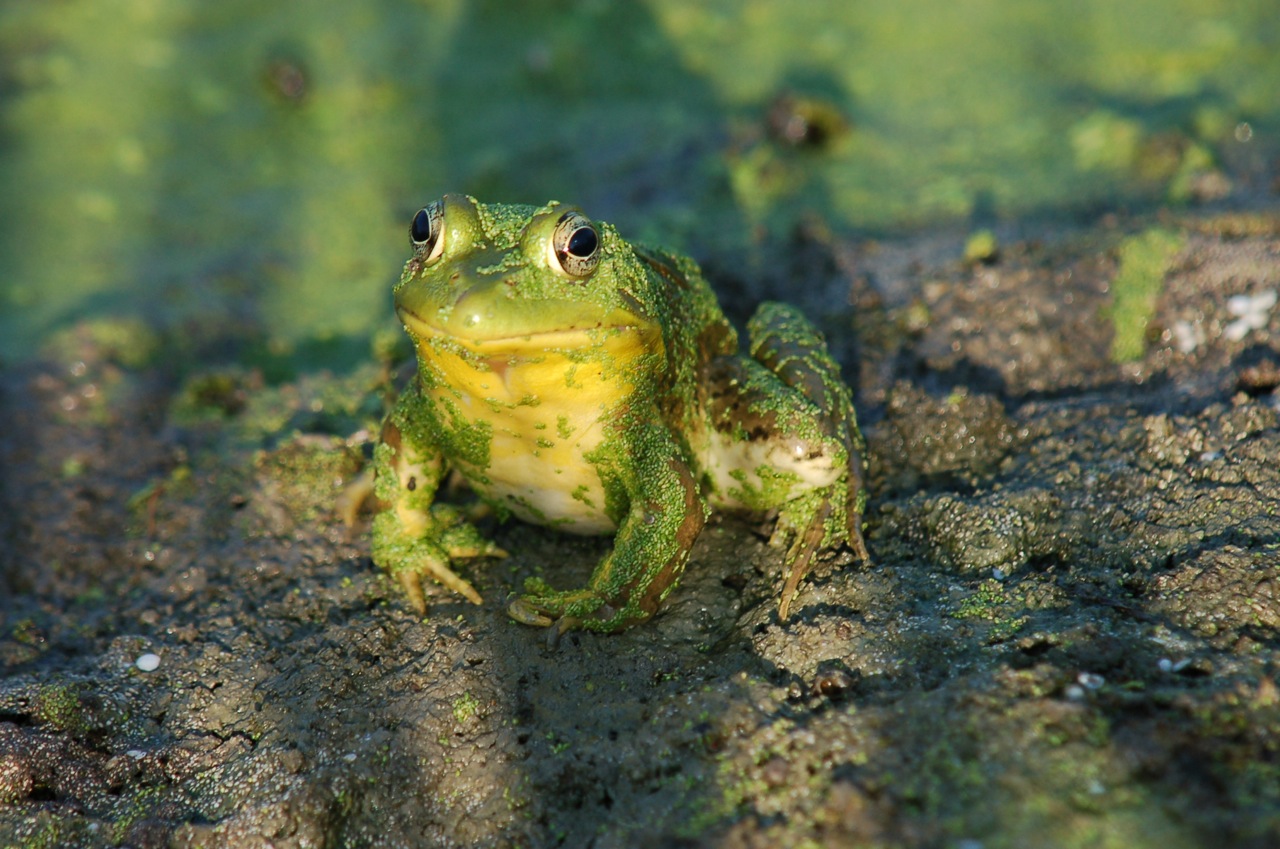 There is a hidden jewel in Lenawee I would like to keep to myself. I was there Saturday morning. I’ve been going there for years. There are only a few places left in Lenawee to get away from developers. Land is a valuable commodity. But, thankfully there are a few people left who still believe in conservation. This little Green Frog is surely thankful that her home has been saved. I am certainly thankful. After our brief photo shoot I continued down the trail.
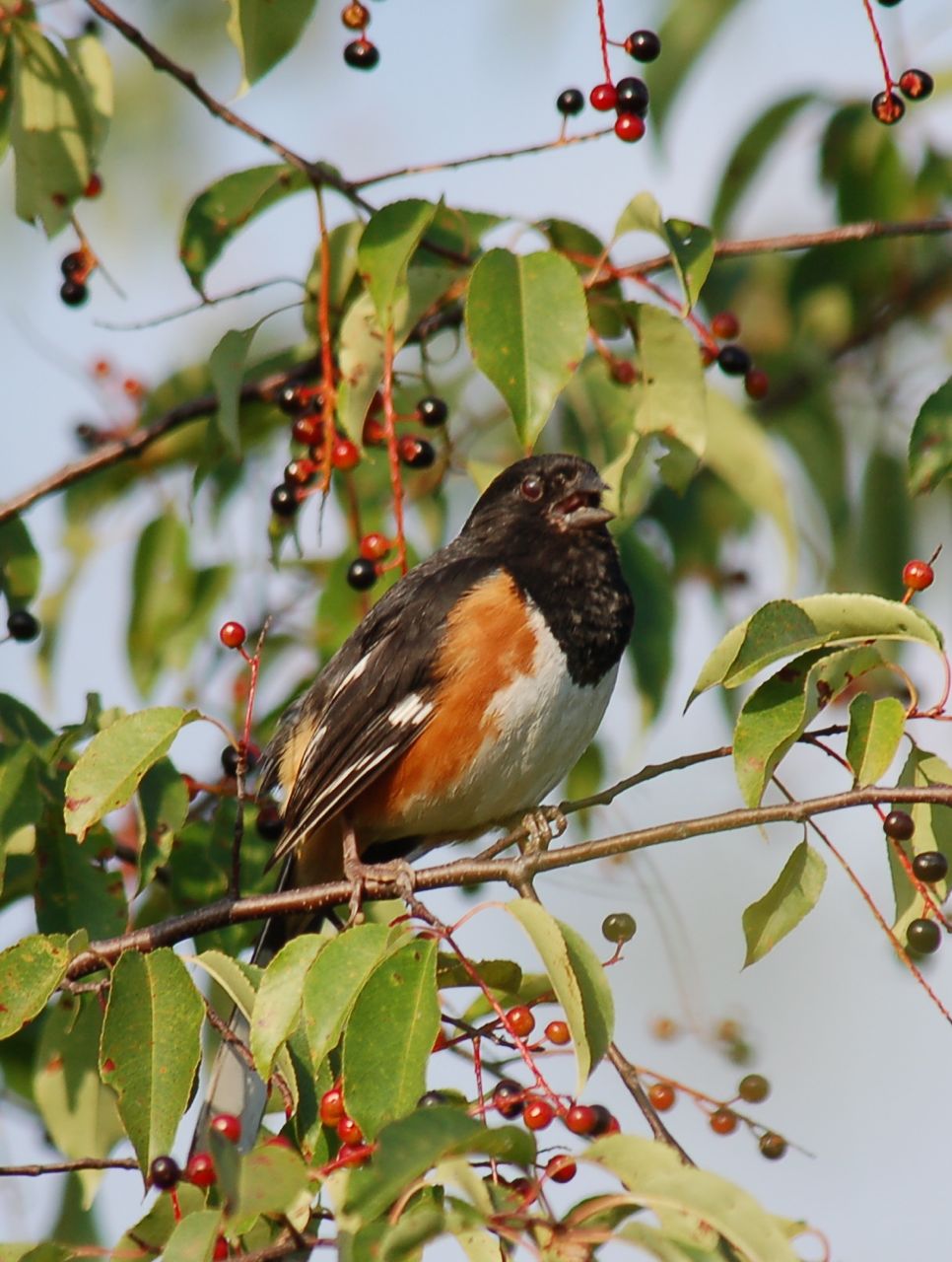 I was pleased to hear one of my favorite bird calls, “Drink Your Teeeeea”. They are a challenge to photograph. I have never seen one stay still for very long. But this Pipilo erythrophthalmus (Eastern Toweee) did, at least long enough for me to take his picture. I rarely see or hear this bird in my own yard. So I wouldn’t characterize him as one of my usual suspects. So I was pleased to take his picture. After our brief photo shoot I continued down the trail.
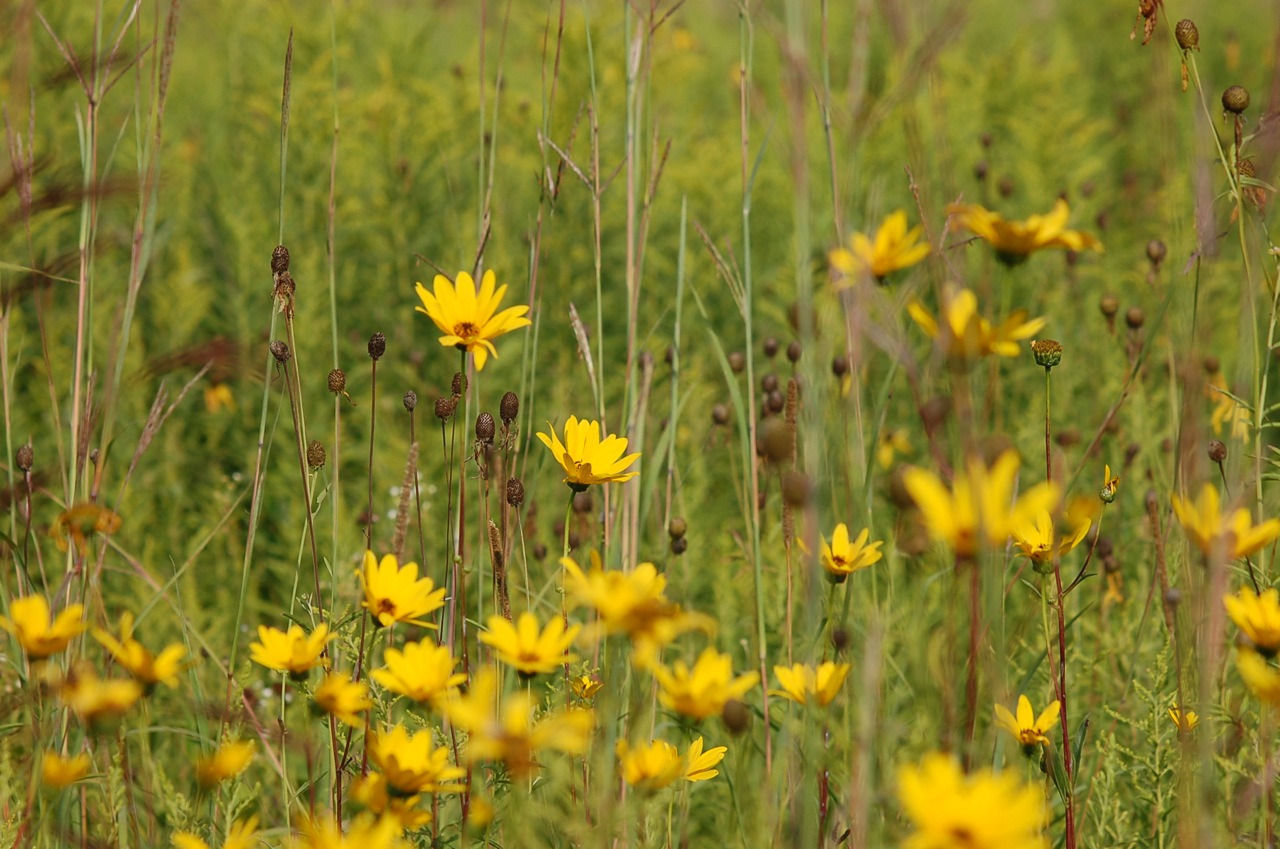 I continued walking the through the rolling meadows. Occasionally, the trail would take me by a new pond with more frogs. A Red-tailed Hawk has made this park his home. I see him circling above each time I visit. I also see and hear Song Sparrows and Field Sparrows. I remember that the Spizella pusilla (Field Sparrow) is #9 on the Audubon Society’s birds in decline list. I believe the reason was typical, loss of habitat.
Along the trail I found an Oak Tree that I didn’t remember seeing the last time I was there. It was a Quercas macrocarpa (Bur Oak). I tip toed through the poison ivy to get a closer look at its leaves to verify the species. I continued down the trail.
The trail was leading to the wooded section of the park. I unholstered my bug dope and applied it liberally before entering. It was deet free. I wondered if it would pass the test of the swampy woods? I stopped at the woods edge to identify a Quercas rubra (Red Oak) and then shortly after a Carya glabra (Pignut Hickory). After the second tree ID I decided to retreat. The new deet free bug spray was failing miserably. I back tracked a short distance and then continued down a new trail leading me further into the park. The sun was getting higher in the sky. The humidity was increasing. Some people don’t like to sweat. I love it. It reminded me of high school wrestling practice. Anyway, I needed the exercise. I continued down the trail.
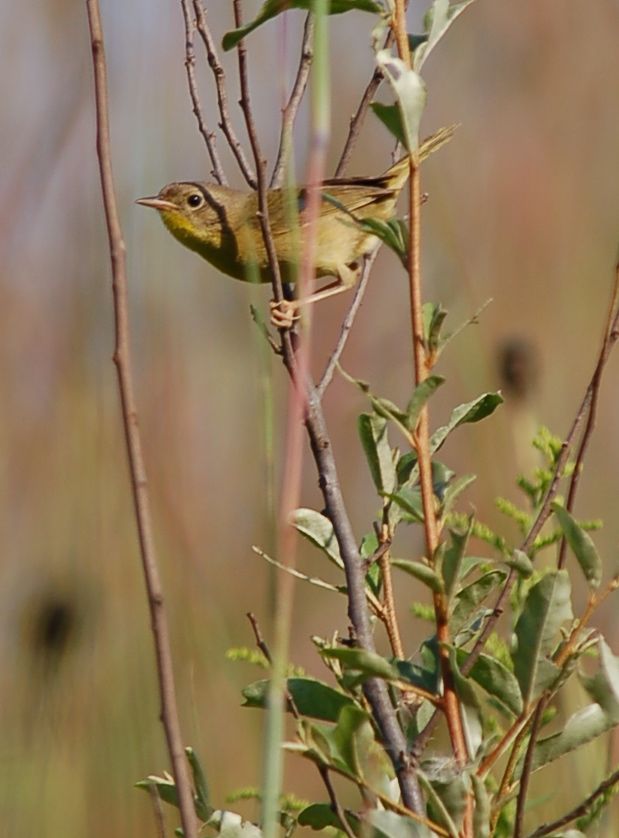 As I walked through the prairie I heard a familiar bird call. It’s a call that I hear on my weekday walks. I didn’t have my binoculars so I couldn’t be sure of what it was. I watched it closely as it darted in and out of the brush. And, then finally it flew out into the open. I quickly snapped her picture. In an instant she was gone. After reviewing the photo I’m pretty sure it was a female Geothlypis trichas (Common Yellowthroat). Her call note is a quick “chep”. I never heard the more common song of “witchety, witchety, witchety”. But, I’m almost certain it is the Yellowthroat.
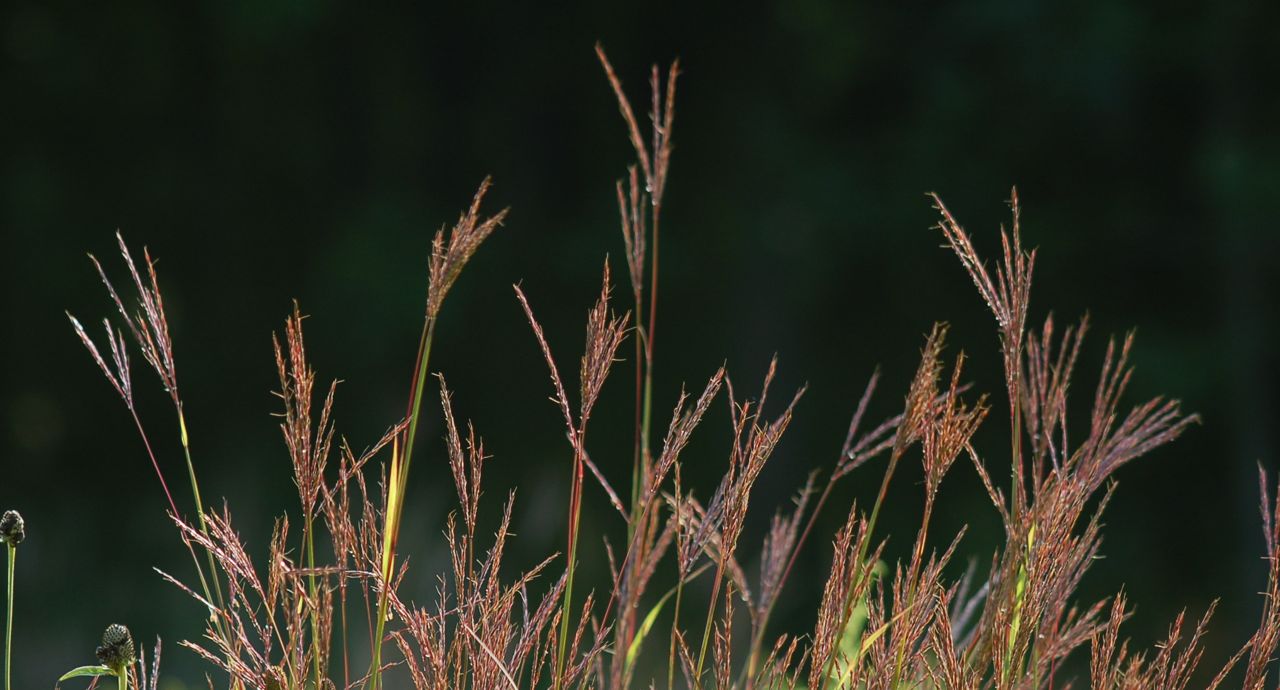 It was getting hotter by the minute. I decided to head back to my car. I stopped to snap this photo of the Big Blue Stem and to identify another Oak tree. This time it was a Quercas alba (White Oak). It was a fruitful day. I loved every minute of it….yes, I even loved getting chased out of the woods by mosquitos. They provide me with humility. We are not masters of the universe. We are just food for mosquitos…and eventually worms.
Monarchs Third Symphony
 It was a windy day at Heritage Park this afternoon. I took a stroll through the swamp before dinner. I stopped by the pond and found a few Monarchs feeding on Swamp Milkweed. I watched this one for a long time and studied his movements. They appear to constantly change directions. They’re a lot like me when I’ve had too much coffee. But let’s be honest. I’m a lot like them without the coffee…not in appearance, but in their actions. A few years ago I was hanging out in at the Sugarlands Visitor Center in the Great Smoky Mountains. I heard a bird identification cd playing on the PA system. I went inside, bought the cd and listened to it non-stop for about a year until I had almost all the bird songs memorized. Shortly after that I was given a Michigan Frogs cd. It was a little easier to memorize the frog sounds since there aren’t as many frogs as there are birds. Not too long after that I picked up a little pocket-book titled, “Tree Finder” by May Theilgaard Watts. I’ve been taking it on my walks in the woods. So when the birds and frogs are quiet, I identify trees. Trees by far as the easiest to identify. They can’t hide or jump away. They patiently wait while I study their leaves. I think wildflowers will be next on my list. Anyway, I once heard someone say that learning about nature is a lot like listening to a symphony orchestra. After attending some Adrian Symphony Orchestra concerts with music director John Dodson I tend to agree. John breaks the music down into parts that are easy to understand and identify. Afterwards, you begin to understand the beauty and the genius of the composer. There is definitely genius in natures composer. I doubt I will ever be convinced that God wasnt involved. Mostly because I am humbled by the complexity, life in the balance and how perfect it is. Man now has the ability to create life by cloning. Man can now manipulate cells to create perfect humans. Man can claim that he is solving all the mysteries of life. But nature is out of balance because of man. Animals are dying because of man. The planet is out of balance because of man. There is no symphony in mans attempt at playing god. There is just a director waving a stick in the mirror. I’m sorry but you’re not God. You stink at trying to be God. So get over yourself. I would rather listen to Monarchs Third Symphony. Now that’s genius.
Got Milkweed?
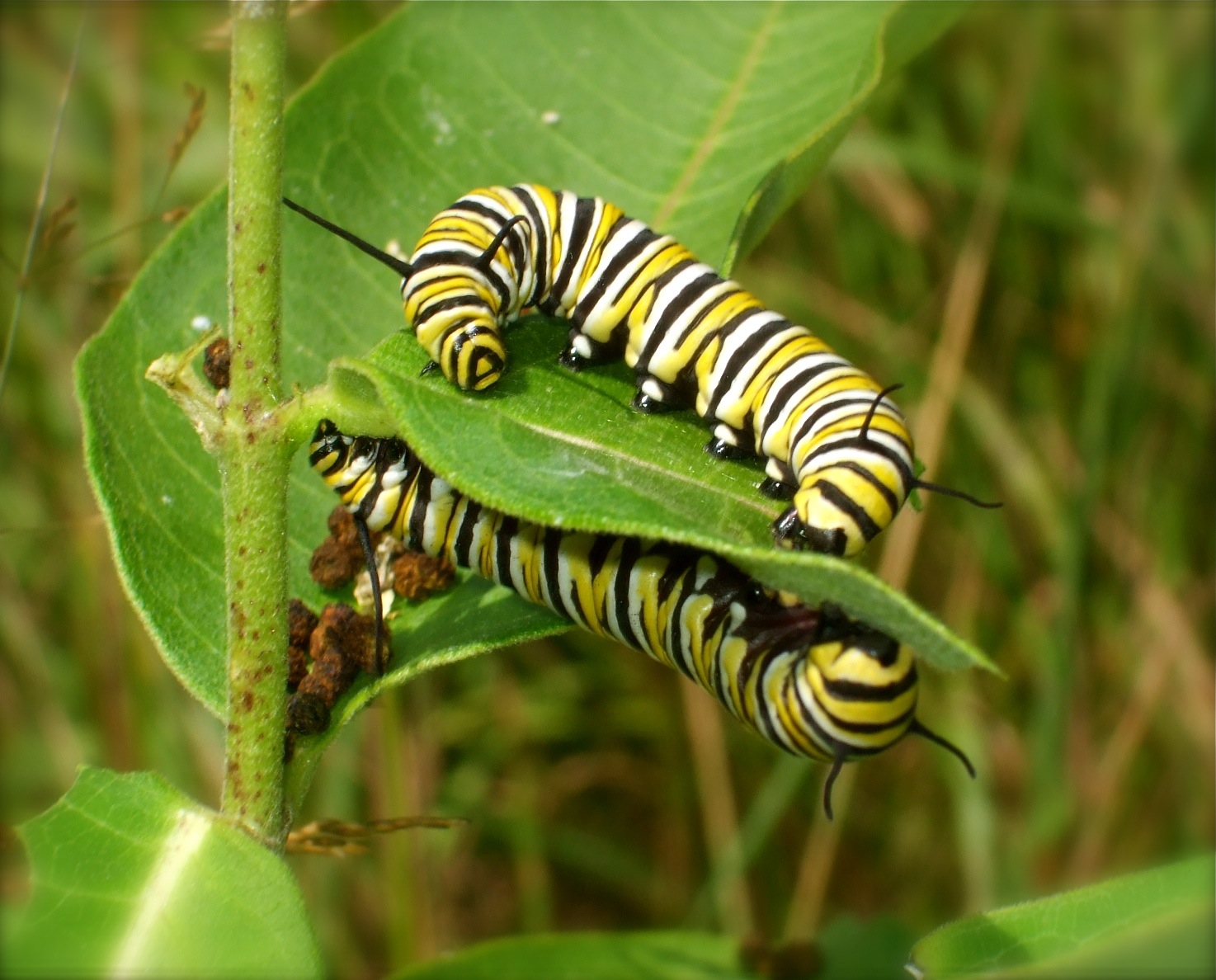 Got Milkweed? That’s what these fat Monarch caterpillars want to know. These two little guys were chowing down on Common Milkweed along the trail at Nichols Arboretum in Ann Arbor. I’m going to attempt to sow some Milkweed in our perennial garden next year. There are approximately 140 species of Milkweed. There are two kinds of Milkweed common to southern Michigan. They are Common Milkweed and Swamp Milkweed. The naturalist at the Dahlem Center in Jackson told me that if you collect a Monarch Caterpillar off a Common Milkweed you should feed it Common Milkweed. And, if you collect them off of Swamp Milkweed you should feed them Swamp Milkweed. I always check the undersides of Milkweed to look for eggs. Sometimes I get lucky and find the caterpillars. You might think this is a childish activity. Well, I agree. It is. Children seem to be born with an inquisitive nature. But somewhere along the way that childlike fascination gets lost. Where does it go? Does it get buried beneath responsibility? Or does it get filed away with imagination? Well, I try to keep mine close by. It’s important know where butterflies come from. What would our world be without them? Monarchs may not be here forever. Their wintering grounds in Mexico are slowly being deforested. You feed the birds. You feed the squirrels. Why not feed the caterpillars? They need your help. Got Milkweed?
Here is a nice link for the condition of Monarch wintering sites in Southern California. Click here.
I vote for Wetlands
 Someone recently sent me “The River Raisin Watershed Management Plan”. Have you read it? It’s not as dry as you might think. I actually enjoyed reading it. Here’s what it says in a nutshell. The River Raisin is in bad shape and it’s due mostly to the agricultural industry. Before you get pissed off, hold on! This isn’t a report that just criticizes the ag industry. It provides good suggestions for working with the ag industry to fix the problems. I like that. But, this plan will probably fall on deaf ears in Lenawee County. There are a lot of farmers here. 75% of the watershed is farmed. Many of the farms are struggling. And, farmers have the right to do as they please. It’s their land. The good news is that we have access to one of the best agricultural institutions in the United States in Michigan State University. MSU always comes to the rescue for us here in southern Michigan. And, the River Raisin does need some rescuing. One thing that might help us according to the RRWMP is “to transition away from growing corn as a biofuel. Corn is possibly the least ecologically sustainable biofuel, requiring significant annual nitrogen inputs, pesticide application and water.” Personally I think this is priority one and here’s why. Because most polluters are permitted to pollute as long as they do not adversely affect the quality of the water. Since the water sucks to begin with, we tend to have more polluters. It’s a snowball effect. Since agriculture makes up 75% of the watershed. One single change in crop preference could make a huge difference in water quality….and help reduce the number of permitted polluters…ie CAFO’s. I’ve heard that Switchgrass is a much better biofuel. It requires no nitrogen input or pesticide application. Why aren’t we growing it? If you know please enlighten me. I’ll ask some of my MSU friends for that answer.
Another fascinating idea the RRWMP suggests is to convert some farmland back to wetland. Did you know that the Blissfield area used to be a wetland before it was drained for cropland? According to Dr. Jim Martin, Biology Professor at Adrian College, the Blissfield area is a prime location for conversion back to wetland by the DNRe. It is also, however, PRIME land for crops. Should we give up prime cropland for wetland? Hell yes and here’s why. From an environmental standpoint…wetlands naturaly fix the problems caused by our careless use of the land. And, creating a new State Park in Blissfield will draw thousands of recreational birders to the area. We are in the path of two major migratory bird routes. With birds come tourists. How many people do you know come to Lenawee to watch corn grow?
Anyway, you should read the River Raisin Watershed Management Plan if you get a chance. For more information about the River Raisin Watershed Council check out their website.
New Series – Under the Big Bluestem Moon
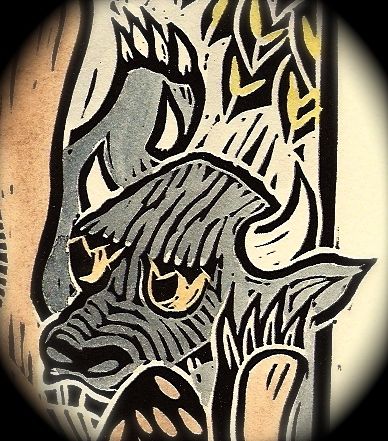
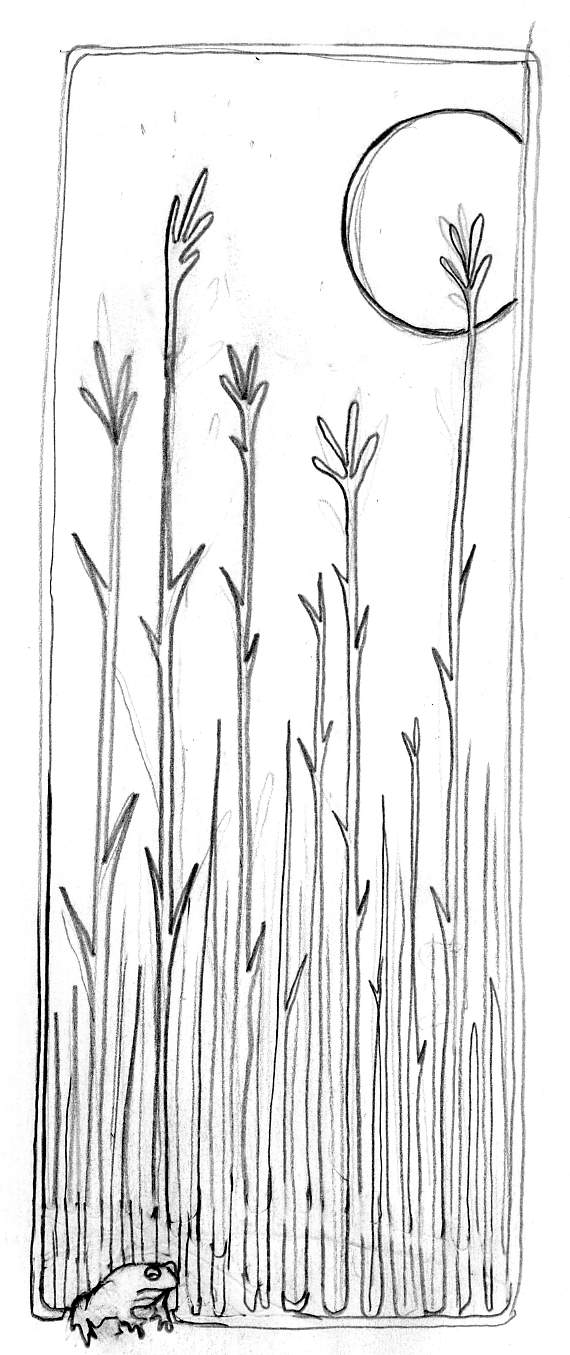 Here’s a sneak peek at my next woodcut which will be titled, “Blue Toad”. It will be one of two woodcuts based on the Big Bluestem Prairie at Hidden Lake Gardens. I’ve decided to do a series of prints based on Hidden Lake Gardens. Some possible titles include, Salamander Moon, Witch Hazel Chickadee, Peace Lily, Cardinal Way, Wild Cherry Skies, Oak Savanna, Wikle’s World, In memory of a Swan and Cedar-Cedar.
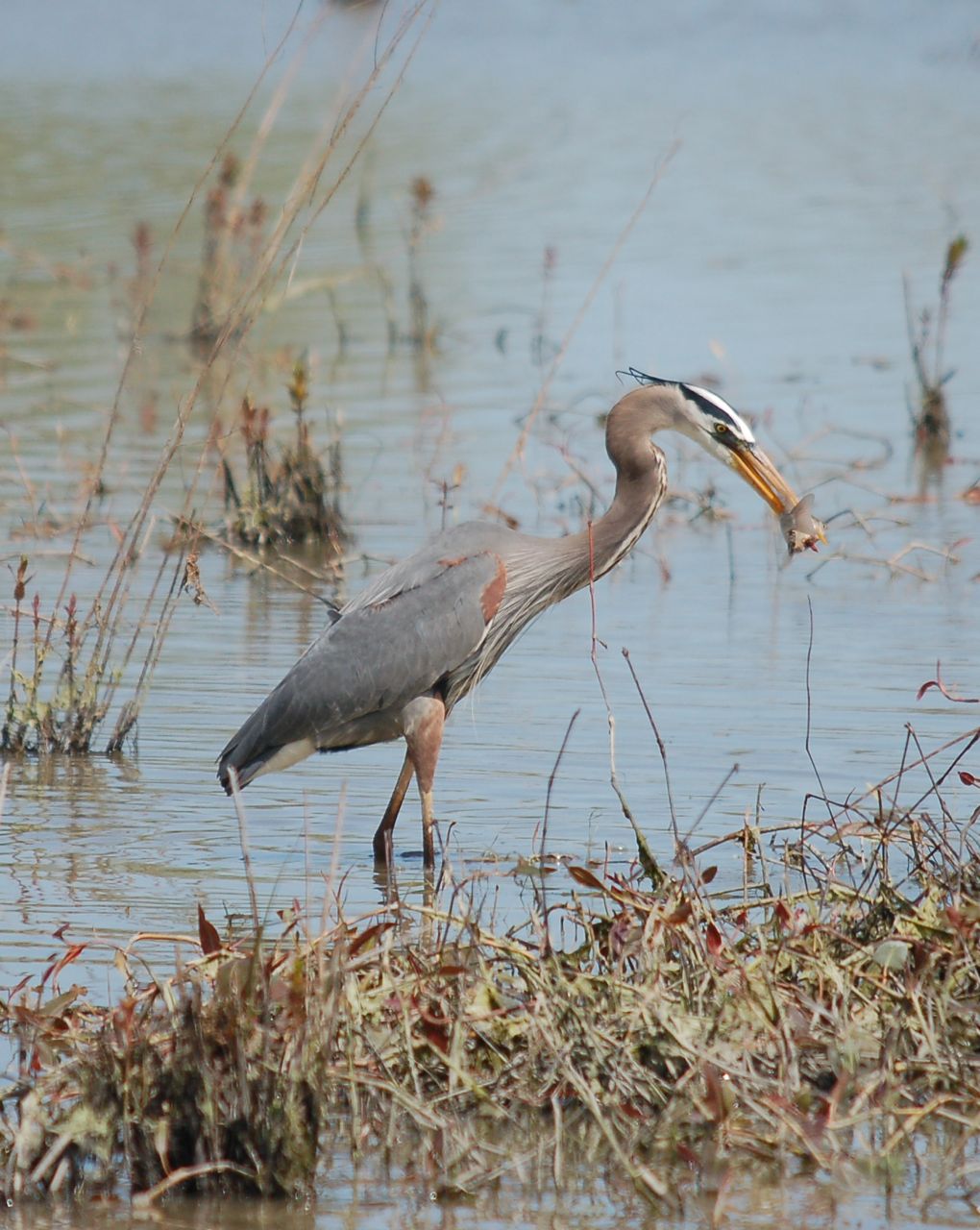
 The Heron